Design and Build IoT-Based Real-Time Seawater Quality Monitoring System for Early Detection of Pollution in Port Areas
Keywords:
Seawater Quality, IoT, Real-Time Monitoring, Early Detection of Pollution, Port AreaAbstract
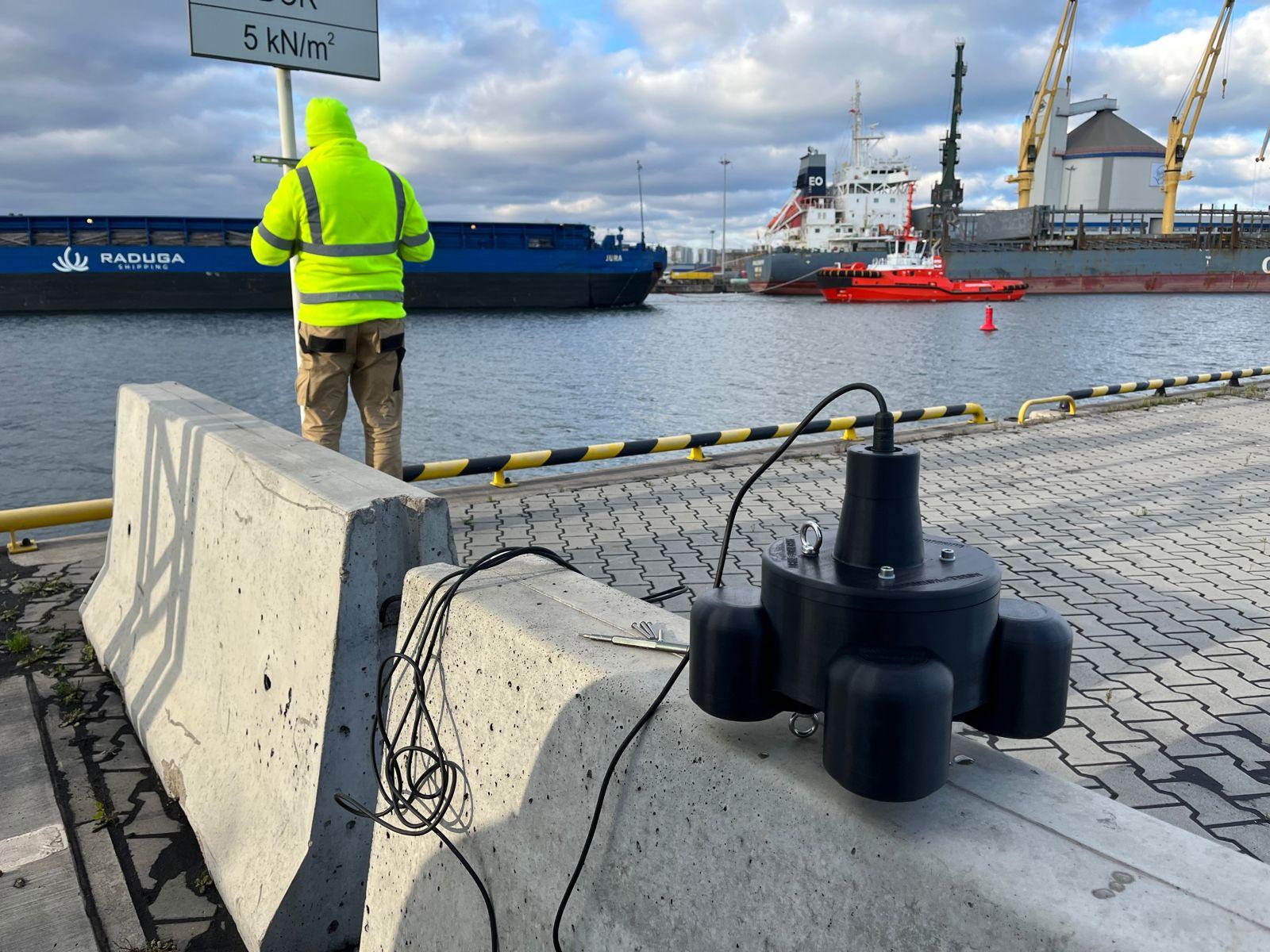
Ports are one of the most vulnerable points to marine pollution due to high loading and unloading activities, ship traffic, and the potential for oil spills and liquid waste from ships. Unfortunately, water quality monitoring in most Indonesian ports is still carried out manually through time-consuming sampling and laboratory testing, so pollution is often only detected after the impact has spread to the surrounding environment. This condition encourages the need for a monitoring system that is able to work continuously and provide information as quickly as possible, so that preventive measures can be taken before environmental damage becomes more severe. This research designed to build an Internet of Things (IoT)-based seawater quality monitoring system that is able to monitor important parameters such as pH, salinity, temperature, turbidity, dissolved oxygen, and oil content in real-time, then send the data to a dashboard that can be accessed at any time along with automatic notifications if there are indications of pollution. The system is tested directly in the port area and the results are read compared to laboratory tests to ensure the level of accuracy. With this approach, it is hoped that the port authorities can respond to potential pollution much faster than conventional methods, as well as be a real step towards more environmentally friendly and sustainable port management.
References
[1] M. Puig and R. Darbra, "Innovations and insights in environmental monitoring and assessment in port areas," Curr. Opinion. Approximate. Sustain., 2024, doi: 10.1016/j.cosust.2024.101472.
[2] M. Koronides, P. Stylianidis, C. Michailides, and T. Onoufriou, "Real-Time Monitoring of Seawater Quality Parameters in Ayia Napa, Cyprus," J. Mar. Sci. Eng., 2024, doi: 10.3390/jmse12101731.
[3] D. Đelović, "Considerations on Prevention of Pollution from Ships in a Seaport," Sustainability, 2024, doi: 10.3390/su16125196.
[4] Z. Jamil, "Towards online surface water quality monitoring technology: A review.," Approximately. Res., p. 117147, 2023, doi: 10.1016/j.envres2023.117147.
[5] C. Li, Y.-Z. Song, and H. Si, "Development and implementation of an advanced shipborne integrated platform for water quality inspection," Front. Mar. Sci., 2024, doi: 10.3389/fmars.2024.1414686.
[6] Y. Singh and T. Walingo, "Smart Water Quality Monitoring with IoT Wireless Sensor Networks," Sensors (Basel)., vol. 24, 2024, doi: 10.3390/s24092871.
[7] N. Arslan, M. M. Nezhad, A. Heydari, A. Garcia, and G. Sylaios, "A Principal Component Analysis Methodology of Oil Spill Detection and Monitoring Using Satellite Remote Sensing Sensors," Remote. Sens., vol. 15, p. 1460, 2023, doi: 10.3390/rs15051460.
[8] R. Yang et al., "Design and implementation of a highly accurate spatiotemporal monitoring and early warning platform for air pollutants based on IPv6," Sci. Rep., vol. 12, 2022, doi: 10.1038/s41598-022-08416-5.